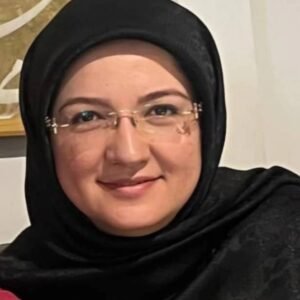
Zahra Mojtahedi is a Tehran-based calligraphy-inspired visual artist whose
practice emerges at the intersection of Persian script, contemporary form, and spatial aesthetics. Her work is shaped by an ongoing inquiry into the relationship between writing and image—where script moves beyond linguistic function and becomes a visual, spatial, and fully realized material presence. Mojtahedi works across a wide spectrum of artistic approaches. Her practice ranges from large-scale decorative panels—defined by rhythmic repetitions, minimal palettes, and architectural harmony—to conceptual and narrative-driven series that explore themes of femininity, veiling, identity, and the unseen layers of personal and cultural experience. In her conceptual works, words extend beyond the surface and transform into texture, fabric, and presence. Here, script replaces face, garment, or skin; it reveals the absent body through stratified layers of writing. The figure is obscured yet unmistakably present, breathing through the lines—a mode of concealment that is not erasure, but an alternate form of narrative.
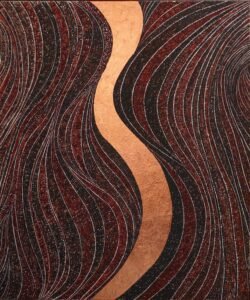
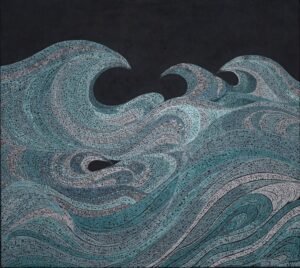
In her decorative collections, Mojtahedi builds works grounded in simplicity
and quietude. Her vertical panels, circular compositions, gold-toned surfaces,
and black–silver structures generate a spatial harmony that is both calming and
assertively contemporary. Many of these works draw upon inspiration from
the Qur’an and classical Islamic texts, integrating selected verses whose
conceptual depth aligns with the emotional and visual atmosphere of each
piece.In these works, the script is not merely inscribed; it is transformed—woven
into a unified aesthetic language where meaning, rhythm, and form become
inseparable. This integration allows her pieces to resonate simultaneously as
modern visual art and as contemplative objects rooted in cultural memory and
spiritual heritage.
Across all of her artistic directions, the script for Mojtahedi is not a return to
tradition but a new language for engaging with the contemporary world—a
language capable of shaping space, redefining beauty, and carrying silent yet
resonant stories.Her practice is an ongoing exploration of how writing can be separated fromliteral meaning and transformed into a visual, emotional, and architectural experience.